Do you remember the last time you walked into a bank to apply for a personal loan? That lengthy queue, the mound of paperwork, the courteous but uncompromising "please come back in 7-10 working days"? That experience is still raw enough to hurt most Indians.
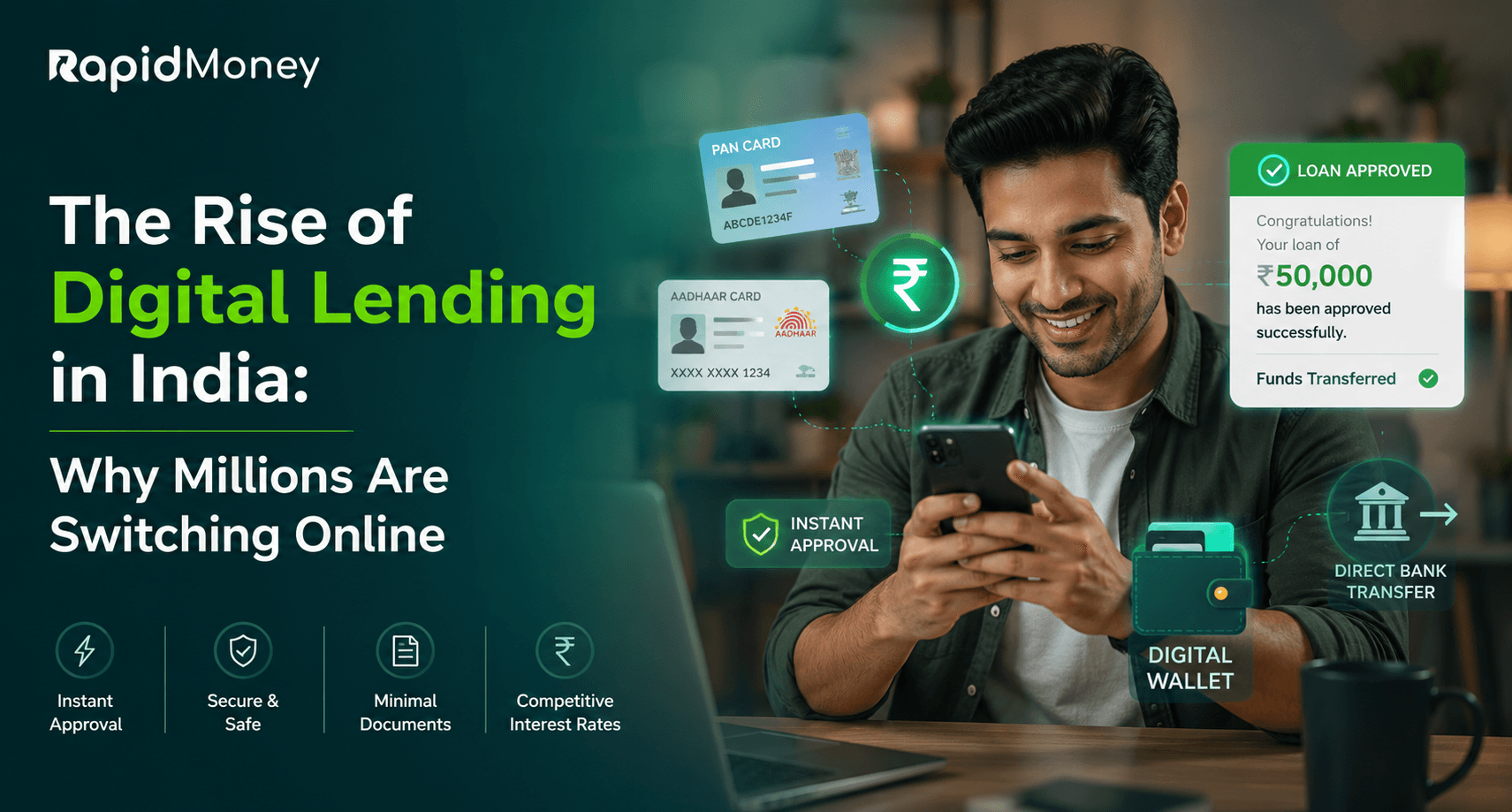
Now think about that today – you open an app on your phone, fill in a few details and get money into your bank account before you’ve finished your morning chai. That is not fantasy. That’s digital lending in India and it’s changing the way millions think about borrowing money.
India's fintech revolution has been loud and fast. Few aspects of it, however, have had such a direct impact on daily life as the arrival of online lending platforms. Across geographies and income groups, from salaried professionals in Mumbai to small shopkeepers in Patna, people are discovering that credit doesn’t have to be complicated. And they're not going back.
What Is Digital Lending & How Digital Lending Works?
Put simply, digital lending is taking out a loan online – no branches, no paper, no queues. The whole process, from application to loan, is conducted through an online or mobile app.
But it’s more than just digitising documents. Technology allows digital lenders to assess your creditworthiness in minutes, looking at data points traditional banks don't even consider: your transaction history, spending habits, and how consistently you pay your utility bills. It’s a different way of thinking about who gets the credit and why.
Types of Digital Loans in India
Digital lending is not a one-size-fits-all solution. Today the platforms offer a variety of products to address specific needs:
Digital Lending vs Traditional Banking: How Far We Have Come
To understand why digital lending has exploded, you have to understand what it replaced.
The old banks had been built for another time. Their loan processes were built around physical documentation, branch verification and slow manual underwriting. It worked, eventually, for customers who ticked all the boxes — salaried, urban, credit history rich. For the remainder the doors were often closed gently.
<div style="overflow-x:auto; margin:20px 0;">
<table style="width:100%; border-collapse:collapse; font-family:Arial, sans-serif; font-size:15px;">
<thead>
<tr>
<th style="background:#1f2937; color:#ffffff; padding:12px; border:1px solid #d1d5db; text-align:left;">
Feature
</th>
<th style="background:#1f2937; color:#ffffff; padding:12px; border:1px solid #d1d5db; text-align:left;">
Traditional Banks
</th>
<th style="background:#1f2937; color:#ffffff; padding:12px; border:1px solid #d1d5db; text-align:left;">
Digital Lending Platforms
</th>
</tr>
</thead>
<tbody>
<tr>
<td style="padding:12px; border:1px solid #d1d5db; font-weight:600;">
Application Process
</td>
<td style="padding:12px; border:1px solid #d1d5db;">
Offline, branch visit required
</td>
<td style="padding:12px; border:1px solid #d1d5db;">
100% online, from any device
</td>
</tr>
<tr style="background:#f9fafb;">
<td style="padding:12px; border:1px solid #d1d5db; font-weight:600;">
Approval Time
</td>
<td style="padding:12px; border:1px solid #d1d5db;">
Several working days
</td>
<td style="padding:12px; border:1px solid #d1d5db;">
Minutes
</td>
</tr>
<tr>
<td style="padding:12px; border:1px solid #d1d5db; font-weight:600;">
Documentation
</td>
<td style="padding:12px; border:1px solid #d1d5db;">
Extensive paperwork
</td>
<td style="padding:12px; border:1px solid #d1d5db;">
Minimal (Aadhaar + PAN + Bank Account)
</td>
</tr>
<tr style="background:#f9fafb;">
<td style="padding:12px; border:1px solid #d1d5db; font-weight:600;">
Accessibility
</td>
<td style="padding:12px; border:1px solid #d1d5db;">
Limited to branch hours
</td>
<td style="padding:12px; border:1px solid #d1d5db;">
24/7, including weekends and holidays
</td>
</tr>
<tr>
<td style="padding:12px; border:1px solid #d1d5db; font-weight:600;">
Disbursal
</td>
<td style="padding:12px; border:1px solid #d1d5db;">
Several days after approval
</td>
<td style="padding:12px; border:1px solid #d1d5db;">
Instant to same-day
</td>
</tr>
</tbody>
</table>
</div>
The difference is stark. For hundreds of millions of people who are self-employed, gig workers, or just outside the formal credit ecosystem in a country, the digital alternative is not just more convenient, it is often the only real option.
Why Millions of Indians Are Changing
Digital lending’s explosion in popularity is not due to one reason. It’s a combination of things, each one feeding into the others.
1. The actual speed
When you need cash in an emergency — a sudden medical bill, a burst pipe, a missed paycheck — time is of the essence. Old-school loan processes aren’t going to cut it. AI-powered underwriting and real-time verification allow digital lenders to assess and approve a loan application in less than 10 minutes. For many borrowers the cash arrives before they’ve even had time to explain the situation to their family.
This is not just convenient. For people who don’t have the financial buffers, speed can be the difference between a problem and a crisis.
2. Can apply from anywhere.
India has 1.4 billion people but not all of them live near a bank branch. City branch visits involve time off work, traffic and long waits. Digital lending takes all that out. Your phone is your bank branch. Sunday at midnight you can apply. Mess up? Reapply in 2 minutes.
This mobile-first approach is an ideal fit for a population that has skipped desktop computing entirely and gone straight to smartphones.
3. Little Documentation
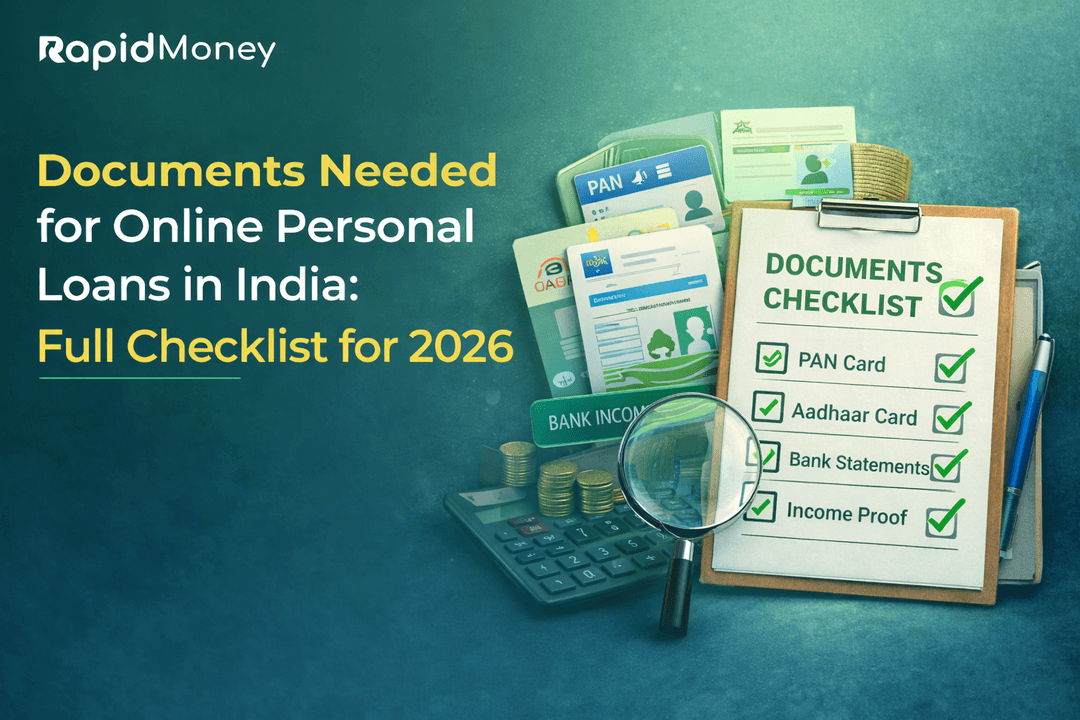
If you ask anyone who has ever applied for a bank loan what the most frustrating part was, nine out of ten will say: the paperwork. Digital lenders have reduced this to a fraction. Most require just three things -- Aadhaar card (identity verification), PAN card (credit and tax checks) and bank account (statement analysis and disbursal). The technology does the rest.”
4. Credit for People with No Credit History
In traditional banking you need a credit history to get your first loan – but you can’t build a credit history without getting a loan first. It is a catch-22 that has locked millions of Indians out of formal credit for generations.
Digital lenders disrupt this cycle by using alternative data. Your mobile recharge behaviour, utility payment history, e-commerce activity and transaction frequency are all tell-tale signs of your financial behaviour. This opens a door that was previously bolted shut for first timers, young professionals and new to credit customers.
5. Versatile Solutions for Every Use
Not everyone needs a loan of Rs 5 lakh. Sometimes you need to get through the week and need ₹5,000, or you need ₹25,000 to fix your two-wheeler. Small ticket borrowers as well as larger ones use digital platforms and tenor can be anywhere between a few weeks to several years.
6. Money When You Need It, Not When a Bank Decides
Medical emergencies don’t occur from 10 AM to 4 PM Monday to Friday. Financial distress never takes a vacation. Digital lending platforms are open 24/7, so you have somewhere to turn when life throws you a curveball – any time, any day.
The technology that makes it all work
Nobody thinks of the technology working in the background to enable every smooth loan approval.
What’s Fueling This Boom? The Larger Picture
India now has more than 900 million internet users and smartphone penetration is growing fast, especially in smaller cities and towns. There’s more people than ever who have the device in their hands and the connectivity to use it.
The government has created a digital infrastructure through the Digital India initiative that fintech companies can plug into. UPI is exploding and the Aadhaar system is widely adopted. India’s UPI platform now handles billions of transactions a month — a sign that Indians are perfectly comfortable with digital financial tools.
At the same time, demand for personal credit has also surged. An expanding middle class, rising aspirations and a growing gig economy means more people require flexible access to funds. Fintechs, unrestrained by the legacy systems and bureaucratic inertia of traditional banks, have been quick to fill that gap.
What Are the Real Benefits to Borrowers?
The risks are real – don’t ignore them
To celebrate digital lending without acknowledging the real risks it entails would be a lie.
Fake loan apps have been a serious problem in India and they are growing fast. Predatory platforms have preyed on vulnerable borrowers with sky-high interest rates, harassment tactics and invasive data access. The fallout has been devastating for some borrowers.
Data privacy is a valid concern. Using a digital lending app means sharing financial and personal data. Not every platform handles that data with the care or transparency it deserves.
Hidden charges and confusing fee structures have caught many borrowers by surprise. And easy access to credit can lead to over-extending – borrowing beyond what you can comfortably repay.
How to pick a platform you can actually trust
Digital Lending and Financial Inclusion: The Broader View
For decades the only people who had effective access to formal credit were the formally employed – people with payslips, permanent addresses and established credit histories. Everyone else – farmers, daily wage workers, domestic workers, street vendors, gig economy workers – had to go to informal moneylenders who lent at usurious rates.
Digital lending changes the equation. It opens up the way for formal credit for people who have never had it, by using alternative data and mobile based verification. Women entrepreneurs in rural Rajasthan, young delivery workers in Tier-3 cities, first-generation salaried workers in small towns – all these groups are slowly getting access to financial tools that more privileged Indians have always taken for granted.
Digital Lending in India: What’s Next?
India's digital lending market is expected to be one of the largest in the world by 2030. The road is clear.
Frequently Asked Questions
1. Is digital lending safe in India?
Yes, if you use RBI-registered platforms. Try to find lenders that are NBFCs or have tie-ups with licensed banks. Do not download apps which ask you to share more data than required or are not available on the RBI website.
2. How do online lending apps check borrowers?
Most platforms use Aadhaar-based e-KYC for identity verification, PAN for credit checks and bank account statement analysis for income and repayment capacity assessment.
3. What documents are needed for digital loans?
Usually, just your Aadhaar card, PAN card and a bank account. Some lenders may also ask for the last three to six months of bank statements.
4. Can I get a loan with no credit score?
Yes. Many of the digital lenders target new-to-credit customers and use alternative data – transaction history, utility payments, mobile usage – to evaluate creditworthiness instead of relying on a CIBIL score alone.
5. How fast are digital loans approved?
Most reputable platforms will approve you within minutes. Disbursal to your bank account is usually within a few hours and same day transfers are common.
6. Are digital lenders covered under RBI?
Yes. All legitimate digital lenders in India are either RBI-regulated NBFCs or are working as lending service providers (LSPs) in partnership with RBI-registered entities. The RBI has also issued some Digital Lending Guidelines to protect borrowers.
7. What distinguishes a digital lender from a bank?
Banks are conventional financial entities with branches and broader services. Digital lenders are mainly NBFCs or fintech companies that operate purely online and are aimed at providing faster and more accessible credit products.
8. What is the best loan for emergencies?
Instant personal loans and salary advance loans are best for emergencies as these are sanctioned and disbursed quickly. Always compare interest rates and read the terms and conditions before applying.