Picture this: you took a personal loan two years ago, and now — thanks to a bonus, an inheritance, or just smart saving — you have enough money to pay it off completely. Should you go ahead?
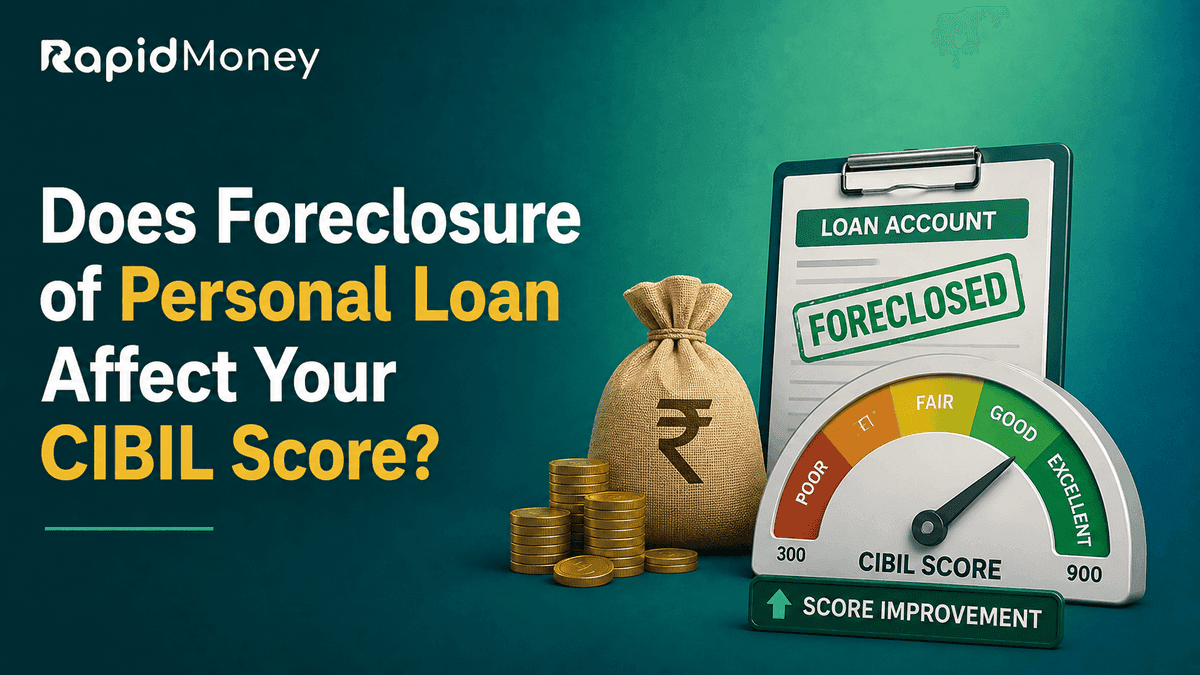
Most people assume that clearing a loan early is always a good financial decision. But here's the twist: personal loan foreclosure can either help or hurt your CIBIL score, depending on how and when you do it.
Your CIBIL score (also called a credit score) is a three-digit number ranging from 300 to 900. It decides whether you get approved for future loans, credit cards, and even rental agreements. One wrong move — and that number could dip when you least expect it.
In this guide, we break down exactly how foreclosure affects your credit profile, what the lenders won’t always tell you, and how to make a decision that works in your favor.
Personal loan foreclosure means paying off your entire outstanding loan balance before the scheduled end of your loan tenure. It is also called loan prepayment or early loan closure.
When you foreclose a loan, you:
This process is different from defaulting on a loan (which is bad for your score). Foreclosure is a voluntary act — you choose to close the Loan early because you have the funds to do so.
Your CIBIL score is calculated based on five main factors:
It depends on your financial objectives. If you have excess funds and the interest savings surpass the foreclosure costs, terminating the Loan is reasonable. If the foreclosure wipes out your savings, then keep paying EMIs.
Life is unpredictable. Job changes, medical emergencies, or economic shifts can make future EMI payments difficult. Foreclosing your personal Loan eliminates that risk. A clean, default-free repayment history is one of the strongest pillars of a high CIBIL score.
If you have multiple loans and credit cards running at the same time, your credit utilization ratio may be high. You decrease your open lines of credit. By closing a personal loan, you are decreasing the total amount of active credit you have, which is a positive sign of financial discipline to credit bureaus.
When you pay off a loan and report it as “Settled — Closed” on your credit report, you show future lenders that you are a person who honors their financial commitments. This develops creditworthiness over time.
Credit bureaus reward long and consistent credit histories. When you foreclose a loan, that active account closes. If the personal Loan was one of your oldest or longest-running credit accounts, losing it can reduce your average credit age — and temporarily dip your score.
A healthy CIBIL score benefits from a credit mix — a combination of secured loans and unsecured loans (like personal loans), and revolving credit (credit cards). Closing your only personal Loan reduces this diversity. If lenders see fewer active credit types, they may perceive you as less experienced with managing different kinds of credit.
This is a shock to many folks. There is usually a small dip in the CIBIL score when a loan is closed — even if you paid everything perfectly. Here’s how to think about it. Closing an account removes a “positive contributor” from your active credit profile. The dip usually isn’t long-term (1-3 months), but it’s something to be aware of — especially if you’re in the process of applying for a new loan shortly after.
Most lenders will charge a foreclosure fee of 2%-5% of the principal owed. If you are stretching your savings to close the Loan early, then it may indirectly impact your financial health and your ability to manage other EMIs.
These two terms are often used interchangeably, but they are not the same.
Before you decide to foreclose, factor in the loan foreclosure charges. These vary by lender and loan type:
Pro Tip: Always ask your lender for the exact foreclosure amount in writing before making the payment. This avoids surprises and protects you legally.
Also, confirm:
Calculate your net savings first — Compare the total interest you will save against the foreclosure fees. If the savings outweigh the charges, foreclosure makes financial sense.
Check your CIBIL score before foreclosing — If your score is already above 750, a temporary dip post-closure is less concerning. If it’s below 700, think carefully.
Don’t foreclose right before a major loan application — If you plan to apply for a home loan or car loan in the next 3–6 months, wait. A temporary score dip from foreclosure could affect your approval or interest rate.
Maintain other active credit accounts — To preserve your credit mix after foreclosure, ensure you have at least one other active credit product (credit card, home loan, etc.) that you are managing well.
Always get a No Dues Certificate — This is non-negotiable. It is your proof that the Loan is fully settled. Store both a physical copy and a digital scan.
Monitor your CIBIL report post-closure — Within 45–60 days of foreclosure, check your credit report to confirm the loan status is updated correctly. Errors in reporting are more common than people realize.
Not calculating foreclosure charges upfront — Many borrowers are shocked by the final payoff amount because they forgot to factor in the 2%–5% charge plus GST.
Closing the Loan without preserving any active credit — Foreclosing your only active Loan and having no other credit accounts makes your profile look “thin” to future lenders.
Skipping the No Dues Certificate — Some borrowers assume a bank receipt is enough. It is not. Always collect the official NDC.
Foreclosing during financial stress — If paying off the Loan depletes your emergency fund, the short-term satisfaction may lead to long-term financial trouble.
Assuming foreclosure always improves your score immediately — The benefits take time. Patience is key.
Q1. Does personal loan foreclosure directly improve my CIBIL score?
Not immediately. Foreclosure closes an active account, which may cause a temporary dip. Over time, having zero outstanding debt on that Loan improves your repayment profile and can positively influence your score.
Q2. How long does it take for a foreclosed loan to reflect on my CIBIL report?
Most lenders report to the credit bureaus about 30-45 days after foreclosure. Always check your CIBIL report after 60 days to verify the update.
Q3. Can I foreclose a personal loan at any time?
Most lenders allow foreclosure after 6–12 EMIs have been paid. Check your loan agreement for the lock-in period and applicable foreclosure charges.
Q4. Is it better to foreclose or continue paying EMIs?
It depends on your financial goals. If you have surplus funds and the interest savings exceed the foreclosure charges, closing the Loan makes sense. If foreclosure depletes your savings, continuing EMIs may be safer.
Q5. Will foreclosure charges affect my CIBIL score?
No. Foreclosure charges are a financial cost, not a credit event. They do not directly impact your CIBIL score.
Q6. What happens to the CIBIL score if I settle a loan instead of foreclosing it?
“Settled” and “Foreclosed/Closed” are two different statuses. A settlement (where the lender accepts less than the full amount) is seen negatively by future lenders and can hurt your CIBIL score significantly. Always aim for full foreclosure.
Q7. Can a foreclosed loan ever be reopened?
No. Once a personal loan is foreclosed and a No Dues Certificate is issued, the loan account is permanently closed. You would need to apply for a new loan if required.
Q8. Should I foreclose if I have a low CIBIL score?
If your score is already low, foreclosure may cause a further temporary dip — but it also removes a liability. Focus on fixing any negative marks first (late payments, defaults) before foreclosing.