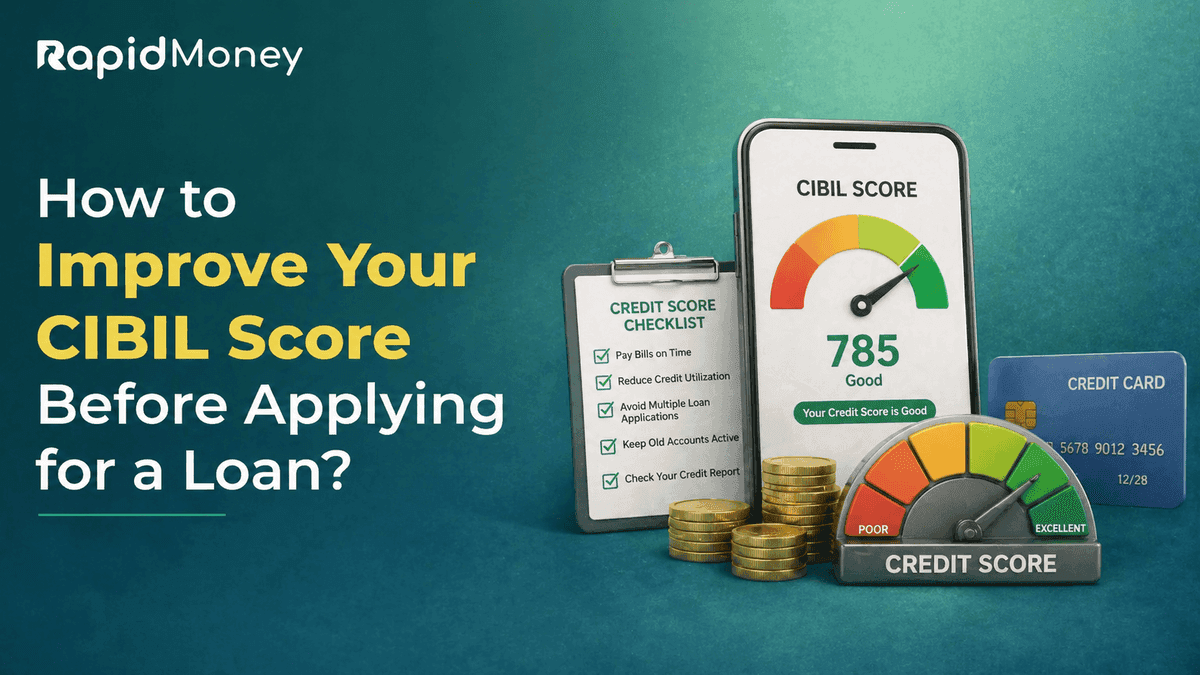
In India, your CIBIL score is not just a three-digit number — it is your financial identity. A score above 750 opens doors to lower interest rates, higher loan amounts, and faster approvals. A score below 650? It can get your application rejected before it even reaches the desk.
The good news is that a low CIBIL score is not a life sentence. With the right steps and a little patience, you can absolutely improve your CIBIL score before applying for a loan. This guide walks you through exactly how to do that — in a practical, no-jargon way that actually works for the Indian borrower.
The CIBIL score is a three-digit credit score ranging from 300 to 900, generated by TransUnion CIBIL — one of India’s four licensed credit bureaus. It reflects your creditworthiness based on your past borrowing and repayment behaviour.
Here’s a quick snapshot of how lenders interpret your score:
Before you can fix something, you need to understand what drives it. Your CIBIL score is calculated based on five key factors:
The first step is knowing exactly where you stand. Under RBI guidelines, every Indian is entitled to one free credit report per year from CIBIL at myscore.cibil.com. Download your report and go through it line by line. Look for:
Errors in credit reports are more common than you think. If you spot any, raise a dispute directly on the CIBIL website. Corrections can take 30–45 days but can meaningfully lift your score.
This cannot be stressed enough. A single missed payment can drop your CIBIL score by 50–100 points, and that mark stays on your credit report for up to 36 months.
Set up auto-debit instructions for all your EMIs and credit card minimum dues. Even if you cannot pay the full outstanding amount on your card, always pay the minimum due on time.
Tip: Set a calendar reminder 3 days before every due date as a backup to auto-debit.
If you have a credit card with a limit of ₹1,00,000 and you are regularly spending ₹70,000–₹80,000 on it, your credit utilisation ratio is 70–80% — a red flag for lenders. To fix this:
Aim to keep your utilisation below 30%, and ideally below 20% if you are planning to apply for a loan in the next 3–6 months.
Many people close old credit cards thinking it will “clean up” their credit profile. This is a common mistake. Older accounts with good repayment history add positively to your credit age — a factor that improves your score over time. Unless a card carries a very high annual fee with no benefit, keep it open and use it occasionally to keep it active.
Shopping for loans is smart — but applying to five banks simultaneously is not. Every application triggers a hard inquiry on your CIBIL report, and multiple hard inquiries within a short window signal desperation to lenders.
Instead, use online loan eligibility checkers (most banks offer these) that run a “soft inquiry” — this does not affect your score. Shortlist two or three lenders based on eligibility, and only then apply formally.
If you have any accounts marked “overdue” or “written off” in your credit report, clearing them is a priority. Even if the amount is small, an unpaid overdue is a serious negative flag.
Important: When settling an old debt, always insist the lender report the account as “Closed” — not “Settled.” A “Settled” status remains a negative mark on your report for 7 years. Pay the full outstanding amount and get a No Objection Certificate (NOC) from the lender after closure.
If your credit history only has personal loans or only credit cards, lenders see limited diversity. A mix of a secured loan (like a car loan or home loan) alongside a credit card is viewed more positively. If you are just starting your credit journey, consider a secured credit card against a Fixed Deposit — this builds your credit profile without significant financial risk.
If a parent or spouse has an excellent credit history, ask them to add you as an authorised user on their credit card. Their positive repayment history can reflect on your report, giving your score a boost — especially if you are a credit newcomer. This is completely legal and a widely used strategy in India.
Your CIBIL score is the gateway to affordable credit in India. Whether you are dreaming of owning a home, buying a car, or funding your business — improving your CIBIL score before applying for a loan.