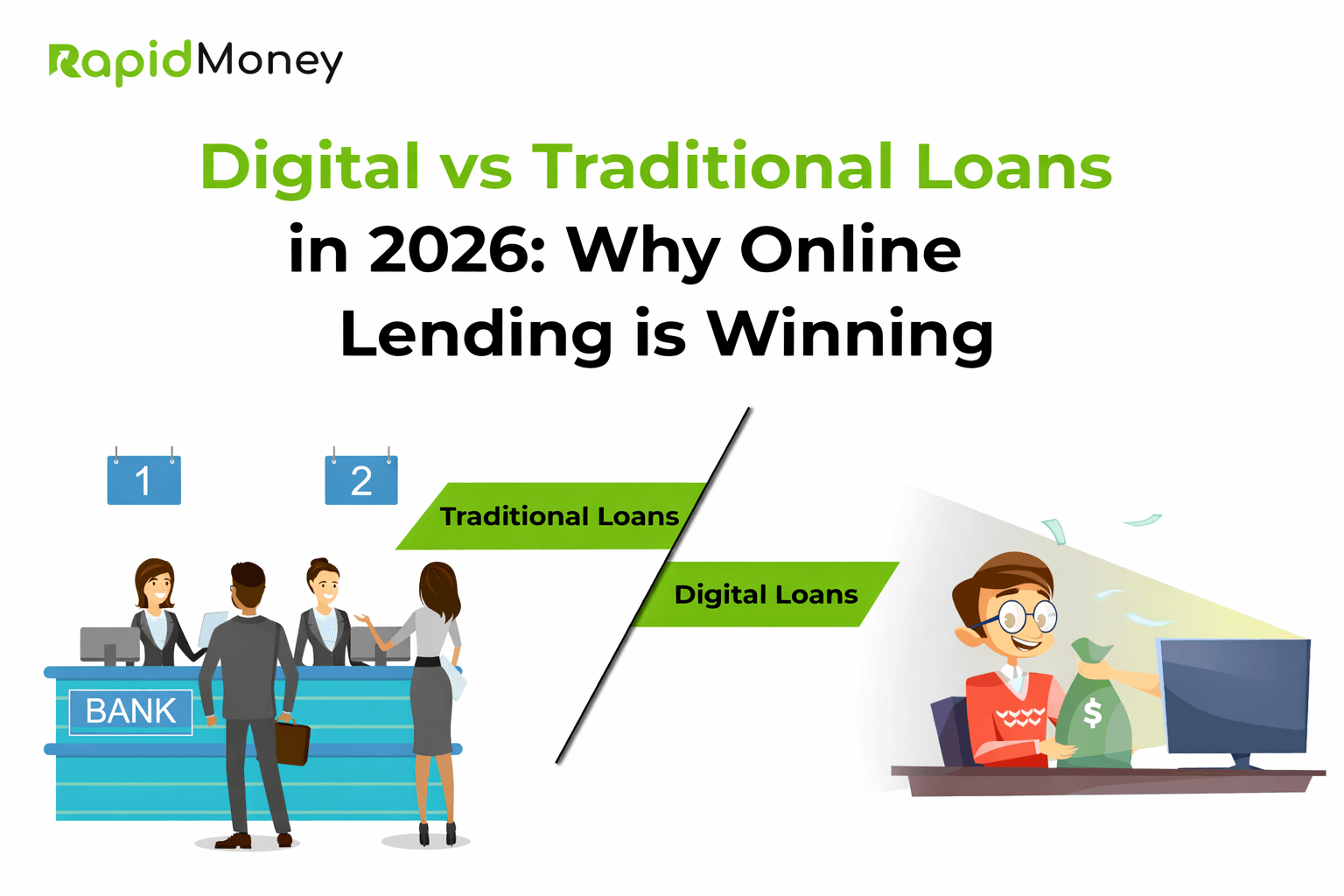
The personal loan industry has experienced a revolutionary shift as more borrowers choose online loans over traditional bank loans. Digital lending platforms are capturing market share by offering faster approvals, lower interest rates, and superior customer experiences. Understanding the differences between online loans and traditional loans can help you make the best borrowing decision for your financial needs.
Why Online Loans Are Faster Than Traditional Bank Loans
Speed remains the biggest advantage of digital lending platforms. While traditional personal loans from banks typically require 7-14 business days for approval and funding, online lenders can approve loan applications in minutes and deposit funds within 24 hours.
For borrowers needing quick cash for emergencies, debt consolidation, or time-sensitive purchases, online loan approval times make traditional banking seem obsolete. The instant loan approval process eliminates lengthy bank visits, paperwork delays, and bureaucratic bottlenecks that slow down traditional lending.
Online Loan Applications: Maximum Convenience for Borrowers
Digital loan platforms operate around the clock, allowing borrowers to apply for personal loans anytime, anywhere. The mobile-friendly application process means you can secure financing from your smartphone without visiting bank branches or adjusting work schedules.
This accessibility especially benefits borrowers in rural areas without nearby banks, busy professionals who can't visit branches during business hours, and anyone who prefers digital-first financial services. Online lending democratises access to personal loans regardless of location or schedule constraints.
Better Interest Rates and Lower Fees with Online Lenders
Online lenders often offer more competitive personal loan rates than traditional banks due to lower operational costs. Without expensive branch networks and large staff overhead, digital lending platforms can pass savings to borrowers through reduced interest rates and minimal fees.
The transparent pricing model of online loans allows easy comparison shopping. Borrowers can quickly compare loan offers from multiple lenders, view all fees upfront, and calculate total loan costs using integrated tools—something traditional banks rarely offer with such clarity.
Simplified Personal Loan Application Process Online
Traditional loan applications require extensive paperwork, multiple bank visits, and manual document submission. Online lenders streamline this through financial technology—using secure bank connections, automated income verification, and AI-powered credit decisions to minimise documentation requirements.
Many digital platforms automatically verify employment and income through linked bank accounts, eliminating the need to submit pay stubs, bank statements, or tax returns. This automated underwriting process makes online loan applications significantly easier than traditional bank loans.
When Traditional Bank Loans Still Make Sense
Despite the advantages of online lending, traditional banks maintain certain benefits. In-person relationship banking, face-to-face financial advice, and the stability of established financial institutions appeal to many borrowers.
Traditional banks also excel with complex financial situations, large loan amounts, or borrowers who want comprehensive banking relationships. For major purchases like mortgages or auto loans, traditional lenders often provide more personalised service and flexible terms.
Choosing Between Online Loans vs Bank Loans
Choose online loans when you need:
Choose traditional bank loans when you want:
The Future of Personal Lending: Digital-First Approach
The trend toward online lending continues accelerating as borrowers demand faster, more convenient financial services. Even traditional banks are investing heavily in digital loan platforms to compete with fintech lenders.
This evolution benefits borrowers through increased competition, better rates, and improved user experiences. The future likely combines the efficiency of online lending with the relationship aspects of traditional banking through hybrid digital-physical models.
Making the Right Personal Loan Choice
Today's lending landscape offers unprecedented options for borrowers. Whether you choose online loans for speed and convenience or traditional bank loans for relationship banking, increased competition drives innovation and better customer experiences.
Success depends on matching your specific needs with the right lending platform. Consider your timeline, loan amount, comfort with technology, and preference for personal service when deciding between digital and traditional personal loans.
Ready to explore your options? Research both online lenders and traditional banks to find the best instant personal loan rates and terms for your financial situation. The perfect loan solution is out there—you just need to know where to look.
FAQs:
Q1: Are digital loans better than traditional bank loans?
Yes, digital loans are better when you need money quickly and want a simple process. They offer faster approval, online applications, and minimal paperwork. Traditional bank loans are better if you want lower interest rates and can wait longer for approval.
Q2: How fast can I get a personal loan online in 2026?
You can get a personal loan online within a few minutes to a few hours in 2026. Most lenders approve loans instantly and transfer the money to your bank account on the same day.
Q3: What are the pros and cons of online lending?
Online lending is fast, convenient, and paperless. You can apply anytime and get quick approval. However, interest rates may be higher, and repayment periods can be shorter compared to traditional bank loans.
Q4: When should I prefer a traditional loan?
You should prefer a traditional loan if you have a good credit score and do not need funds urgently. Bank loans usually offer lower interest rates and longer repayment options.